
AmCham Slovakia has a powerful and direct legislative impact in Slovakia, supporting the continuous improvement of business environment in Slovakia for more than 25 years.

Continual development of the business environment in Slovakia through Committees and other initiatives.
Pillars
AmCham´s mission is to improve the business environment in Slovakia and
increase the country´s competitiveness. By combining our members´ focus
and expertise with most crucial areas for the country we focus our
advocacy efforts on the following four pillars:
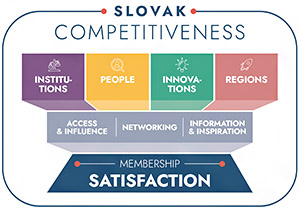

Regions #eastinnovation

People #skills4future

Institutions #ruleoflaw

Innovations #InnovativeSlovakia
Policy/Advocacy Platforms
Rule of Law Initiative #ruleoflaw
- Your Contact person:
-

- Zuzana Serinová
- +421 947 949 005
- zuzana.serinova@amcham.sk
Construction Law Task Force #ruleoflaw
- Your Contact person:
-

- Natália Spodniak
- +421 902 912 000
- natalia.spodniak@amcham.sk
Civil Code Task Force #ruleoflaw
- Your Contact person:
-
- Andrea Brezanová
- +421 948 692 133
- andrea.brezanova@amcham.sk
Public Procurement Task Force #ruleoflaw
- Your Contact person:
-
- Andrea Brezanová
- +421 948 692 133
- andrea.brezanova@amcham.sk
Restructuring and Insolvency Task Force #ruleoflaw
- Your Contact person:
-
- Andrea Brezanová
- +421 948 692 133
- andrea.brezanova@amcham.sk
Tax Committee #ruleoflaw
- Your Contact person:
-
- Andrea Brezanová
- +421 948 692 133
- andrea.brezanova@amcham.sk
Business Service Center Forum #skills4future
- Your Contact person:
-

- Peter Rusiňák
- +421 948 592 775
- peter.rusinak@amcham.sk
Business Academic Cooperation Committee #skills4future
- Your Contact person:
-
- Peter Rusiňák
- +421 948 592 775
- peter.rusinak@amcham.sk

Employment & Social Affairs Committee #skills4future
- Your Contact person:
-

- Júlia Jurčíková
- +421 947 949 001
- julia.jurcikova@amcham.sk
AIslovakIA #InnovativeSlovakia
- Your Contact person:
-

- Martina Slabejová
- martina.slabejova@amcham.sk

Digital Committee #InnovativeSlovakia
- Your Contact person:
-
- Andrea Brezanová
- +421 948 692 133
- andrea.brezanova@amcham.sk
Sustainability and Resilience Committee #InnovativeSlovakia
- Your Contact person:
-
- Zuzana Serinová
- +421 947 949 005
- zuzana.serinova@amcham.sk
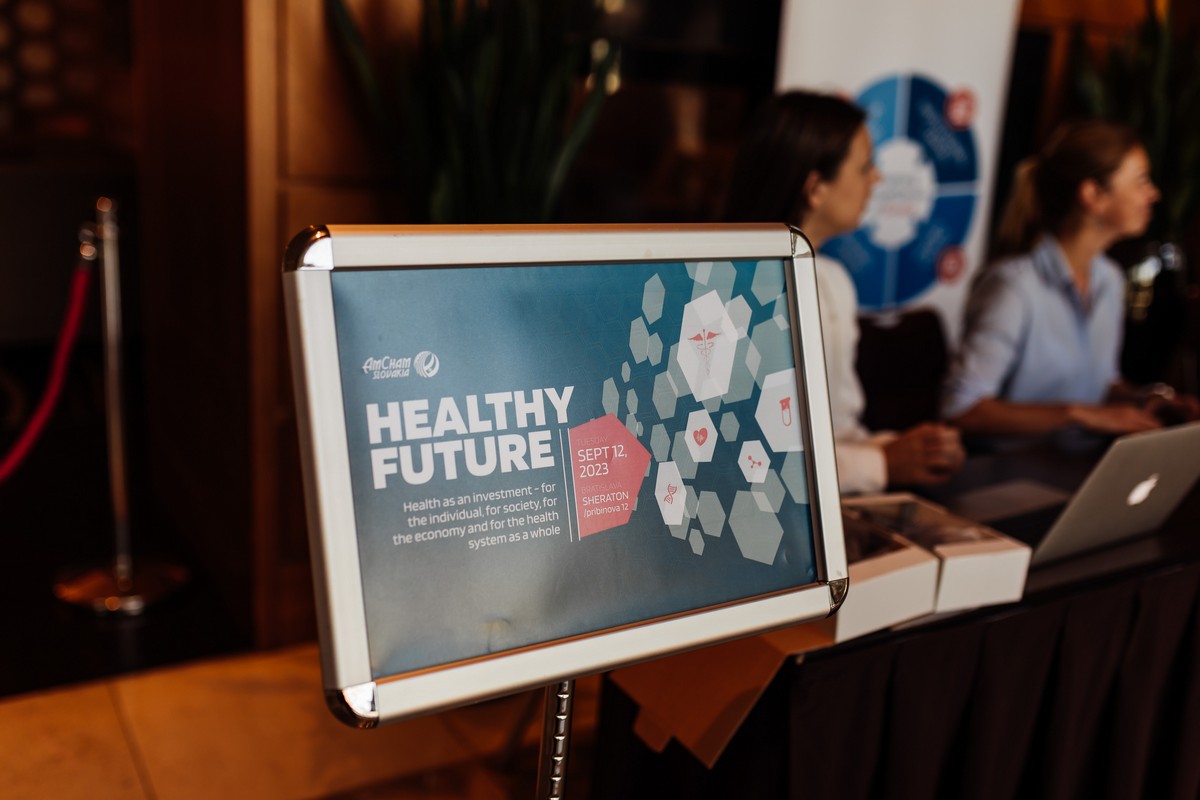
Health Care Committee #InnovativeSlovakia
- Your Contact person:
-

- Dominika Komárová
- +421 947 939 030
- dominika.komarova@amcham.sk
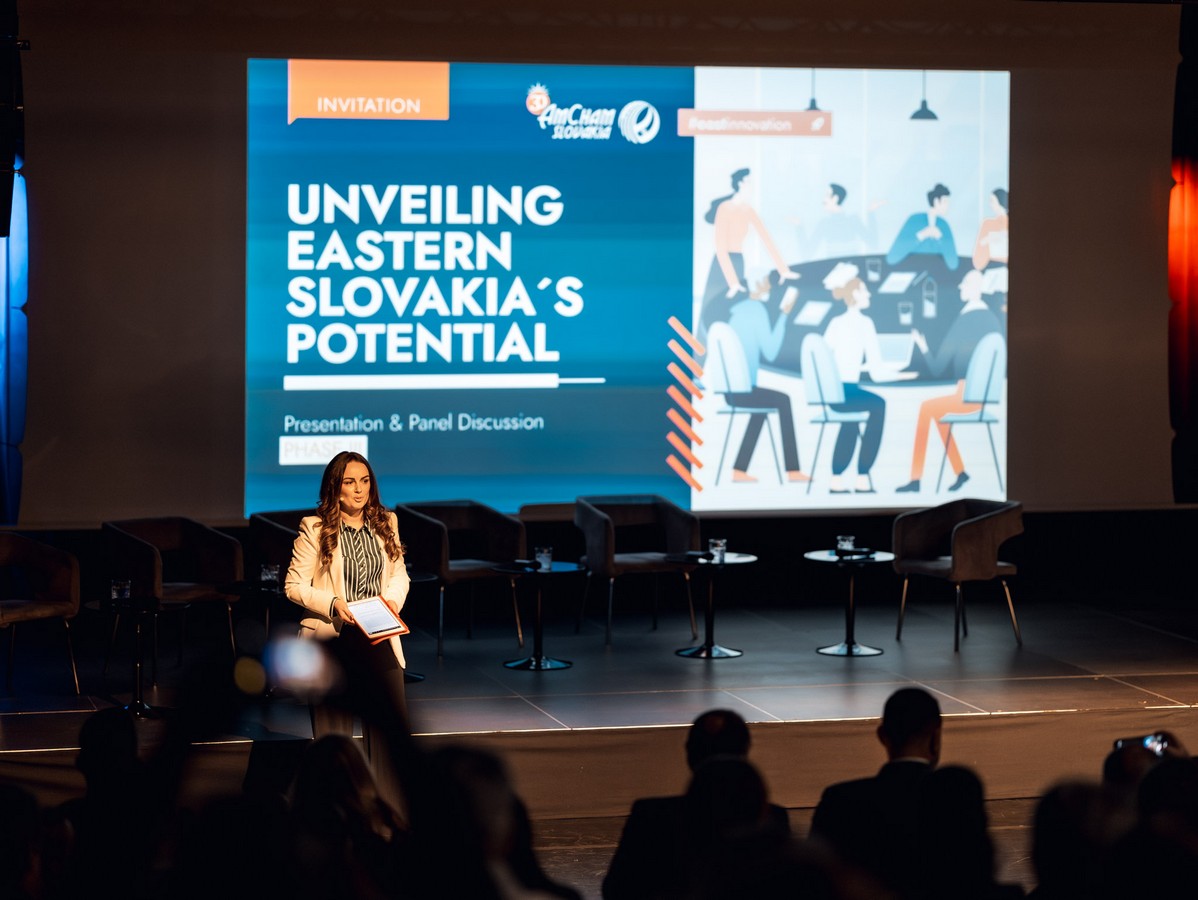
Eastern Slovakia’s Business Potential #eastinnovation
- Your Contact person:
-

- Ján Jaš
- +421 947 948 008
- jan.jas@amcham.sk

Regional Business Community #eastinnovation
- Your Contact person:
-
- Ján Jaš
- +421 947 948 008
- jan.jas@amcham.sk
News and Updates
CMS wins at CBRE Office of the Year Awards in ESG category in Slovakia, Bratislava
CMS Cameron McKenna Nabarro Olswang (CMNO) is pleased to announce that
its new Bratislava office, located at Pribinova 34, has been recognised
at the CBRE Office of the Year Awards, winning the ESG category.
June 05, 2026

TMF Group releases Global Business Complexity Index 2026: new insights for international expansion
TMF Group has released the Global Business Complexity Index 2026,
ranking 81 jurisdictions based on the complexity of operating and
expanding internationally.
May 28, 2026

RUŽIČKA AND PARTNERS: Public Procurement Act Amended 30 Times. The Winner of the Competition Not Once.
RUŽIČKA AND PARTNERS law firm has been honoured as the Law Firm of the Year 2026 in the categories of Public Procurement and Corporate Law, marking our fourteenth consecutive win in public procurement.
May 26, 2026

Penta Real Estate introduces a new cooperative housing model in the Bory district
Penta Real Estate is expanding the range of financing options within its
Bory Bývanie development with the introduction of a new cooperative
housing model.
May 21, 2026

Who is Who Almanac 2026: Voices shaping the future of Slovak economy.
Download and enjoy more than 40 interviews with top leaders of our
AmCham member companies - the leaders of the Slovak business community.
May 19, 2026

Free Expert Webinar Series on Artificial Intelligence, Digital Transformation and Cybersecurity
Faculty of Business Management of the University of Economics in
Bratislava and the AI-ImpactSK project invite companies, managers and
the professional public to a series of expert online webinars focused on
the practical use of artificial intelligence, digital transformation of
enterprises, challenges related to the implementation of AI solutions
and cybersecurity.
May 11, 2026
Who is Who Almanac 2026: Voices shaping the future of Slovak economy.
Download and enjoy more than 40 interviews with top leaders of our
AmCham member companies - the leaders of the Slovak business community.
May 19, 2026
Signing of Memorandum of Cooperation with the National Security Authority
On May 5, AmCham Slovakia has signed a Memorandum of Cooperation with
the National Security Authority (NSA) in the field of cybersecurity.
May 05, 2026
Crisis Management & Fraud Investigation in the BSCF industry: Policy Paper
AmCham´s Business Service Center Forum (BSCF), in close cooperation with
Kinstellar and Deloitte, has recently published its policy paper
providing a practical set of recommendations for compliance, legal,
audit, and operational leaders working in business services and a
captive finance environment.
May 04, 2026
Results of the Elections of the AmCham Board of Directors
As you may know, today the American Chamber of Commerce in the Slovak Republic held the online General Assembly. The results of 2026 elections of the AmCham Board of Directors were officially announced to the members present at the AmCham General Assembly.
April 28, 2026
Candidates for the AmCham Board of Directors 2026
Let us take this opportunity to remind you that AmCham Slovakia will hold the 2026 General Assembly online on Tuesday, April 28, 2026 at 11:00 AM.
March 24, 2026
The Future of Energy Security in Slovakia Roundtables
Energy security is increasingly shaping discussions across Europe, and
Slovakia is no exception. At recent AmCham Slovakia roundtables titled “The Future of Energy Security in Slovakia,”
representatives of government institutions, members of parliament,
industry experts, and business leaders came together to exchange
perspectives on one of the most strategic topics for the country’s
economic future.
March 10, 2026
CMS wins at CBRE Office of the Year Awards in ESG category in Slovakia, Bratislava
CMS Cameron McKenna Nabarro Olswang (CMNO) is pleased to announce that
its new Bratislava office, located at Pribinova 34, has been recognised
at the CBRE Office of the Year Awards, winning the ESG category.
June 05, 2026
TMF Group releases Global Business Complexity Index 2026: new insights for international expansion
TMF Group has released the Global Business Complexity Index 2026,
ranking 81 jurisdictions based on the complexity of operating and
expanding internationally.
May 28, 2026
RUŽIČKA AND PARTNERS: Public Procurement Act Amended 30 Times. The Winner of the Competition Not Once.
RUŽIČKA AND PARTNERS law firm has been honoured as the Law Firm of the Year 2026 in the categories of Public Procurement and Corporate Law, marking our fourteenth consecutive win in public procurement.
May 26, 2026
Penta Real Estate introduces a new cooperative housing model in the Bory district
Penta Real Estate is expanding the range of financing options within its
Bory Bývanie development with the introduction of a new cooperative
housing model.
May 21, 2026
Free Expert Webinar Series on Artificial Intelligence, Digital Transformation and Cybersecurity
Faculty of Business Management of the University of Economics in
Bratislava and the AI-ImpactSK project invite companies, managers and
the professional public to a series of expert online webinars focused on
the practical use of artificial intelligence, digital transformation of
enterprises, challenges related to the implementation of AI solutions
and cybersecurity.
May 11, 2026
Job Opportunities - U.S. Embassy in Slovakia
The U.S. Mission in Bratislava, Slovakia is seeking eligible and
qualified applicants for the Medical Doctor in the Health Unit office.
May 05, 2026

August 23, 2023
download
Legislative & Policy Update - August 2023
Format: pdf, size: 0.35 MB
June 20, 2023
download
Legislative & Policy Update - June 2023
Format: pdf, size: 0.62 MB
May 18, 2023
download
Legislative & Policy Update - May 2023
Format: pdf, size: 0.62 MB
April 19, 2023
download
Legislative & Policy Update - April 2023
Format: pdf, size: 0.59 MB
March 15, 2023
download
Legislative & Policy Update - March 2023
Format: pdf, size: 0.35 MB
February 23, 2023
download
Legislative & Policy Update - February 2023
Format: pdf, size: 0.59 MB
Policy process
Work in Committees and Task Forces
Voluntary participation, no entitlement for compensation.Voluntary participation, no entitlement for compensation.
Chairperson – elected by members of the Committee, approved by the Board
Two (2) Vice Chairs – assists with coordination, in the absence of the Chair takes over the leadership
Chairperson – elected by members of the Committee, approved by the Board
Two (2) Vice Chairs – assists with coordination, in the absence of the Chair takes over the leadership
- Meetings – should be on a regular basis, preferably once a quarter
- Agenda – prepared by C. Coordinator a few working days in advance
- Minutes – Actions and Decisions – sent to C. members within 7 working days after the meeting
Every advocacy initiative should be accompanied by an Advocacy Plan, available at the members only website area, containing:
- Advocacy Tool – Position Papers, Policy Briefs, Press Releases
- Target Audience – Government, Parliament, Stakeholders
- Timeframe – adapted to the AmCham rules and procedures, legislative process or other processes of concern
- Possible Coalitions – Foreign Chambers of Commerce in SR, business alliances, organizations or federations
- Leadership and Issue – Ownership - Chairs, Vice-Chairs, Spokespersons
Standard approval procedure
In case an urgent Position of AmCham needs to be released – two working days. The fast-track procedure has been amended on the Board Meeting in Oct. 2007.
- First stage - pre-draft of a Position Statement, written by a member or committee coordinator is circulated among AmCham members that have expressed interest in the given topic. Comments to be submitted within 5 working days.
- Second stage - members’ suggestions incorporated and an appropriate wording of the position formulated. The second stage shall not exceed 3 working days.
- Third (final) stage - final draft circulated among members and AmCham Board Members for their review. Conflicting requirements to be resolved by the coordinator. The final stage must not last more than 5 working days. Not responding within this timeframe is considered as an approval.
In case an urgent Position of AmCham needs to be released – two working days. The fast-track procedure has been amended on the Board Meeting in Oct. 2007.
- First phase (24 hours – one working day): AmCham consults the proposed Statement (and enclosed Advocacy Plan / Strategy if applicable) with Members of the Board Policy / Advocacy Standing Committee; potential comments and subsequent approval of at least three Members of the Policy Standing Committee and at least one Member of the AmCham Executive Committee are needed within a 24-hour period. In addition, an Executive Sponsor from within the Board must be identified for each initiative.
- Second phase (48 hours – two working days): AmCham sends the draft of the Position Statement in the version approved by the Policy Standing Committee to the full Board. This stage should not last more than two working days. Not responding within this timeframe is considered as approval. Unless a member involved in the process is not happy with the final version, the position paper can be released.
Election Process
A Committee coordinator (member of AmCham policy team) is responsible for conducting a transparent and smooth process of nominations, digital voting via email/Google sheets and announcement of the results.
Committee Election Process:
- A leadership of each committee will be voted by members of a respective committee after two calendar years.
- Only committee members are allowed to run for the elections and have a right to vote.
- Each company would have 1 vote (filling out 1 election ballot giving their preferential vote to 1 chair and 1 vice-chair).
- Chairs and vicechairs are allowed to run for reelection without any limit on the number of terms.
- The Board reserves the right to dismiss a chair and/or vicechair of a committee in case of serious breach of ethical principles and/or lack of professional competency and/ or capacity to lead the committee.
Testimonials
The Business Academic Committee is one of the most active groups at Amcham and our members have contributed many ideas that have turned into actions and concrete results with a very high success rate. We have a constant dialogue with the Ministry of Education and influence decisions that have an effect on all Amcham members. We provide forums where the best and brightest students from our Universities can find their match in the Business world. We bring Deans and Professors in the same room with CEOs to exchange ideas and foster communication. We have success stories that speak for themselves: students turned into interns, interns turned into new hires and on their path to be our future leaders.

—Martin Kardoš, CSI Leasing
Skills for a Changing Economy
“The first fact to acknowledge is the fundamental transformation Slovakia is facing. Challenges that no European country can avoid: shortages of skilled labor, demographic change, and accelerating technological progress, are reshaping labor mark...”
Follow us